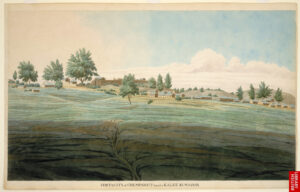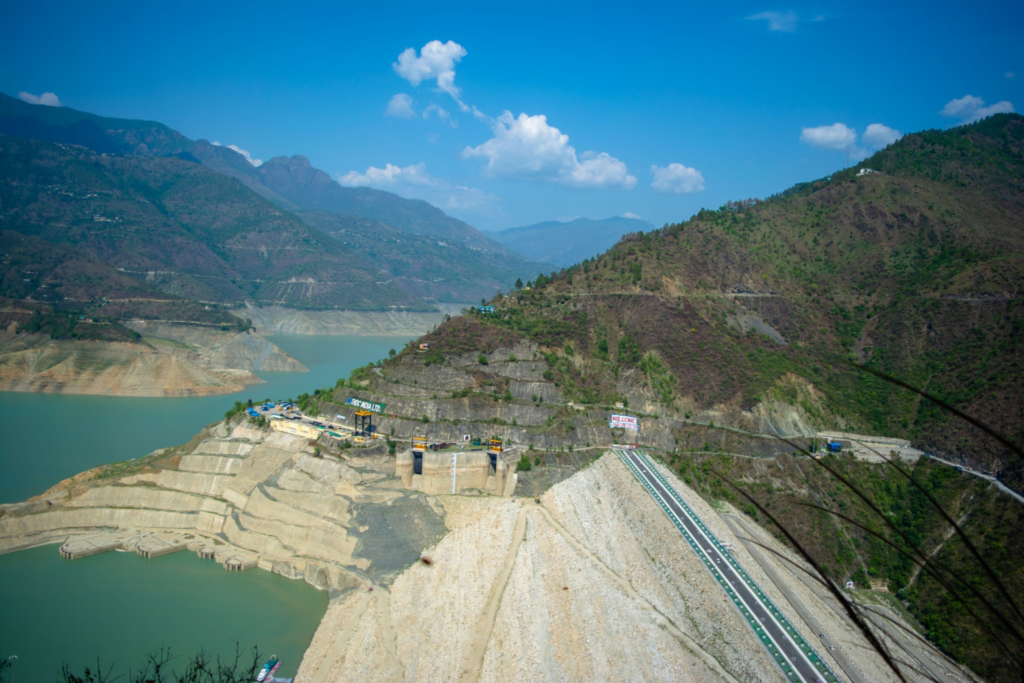
The history of the Garhwal Kingdom is not just a chronicle of kings and battles; it is the story of human resilience set against the backdrop of the most formidable mountain range on Earth. For centuries, the Himalayan region of Uttarakhand served as an impenetrable fortress, a cradle of spirituality, and a sovereign state that outlasted the rise and fall of immense empires in the Indian plains below.
To understand the Garhwali identity today, one must travel back through a millennium of history—from fragmented mountain tribes to a unified empire, through devastating invasions, and ultimately to its integration into modern India.
The Land of Kedarkhand: The Pre-Dynastic Era
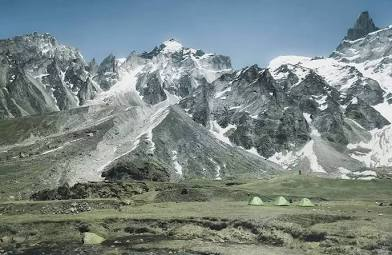
Long before it was known as Garhwal, the region was referred to in ancient Hindu texts as Kedarkhand—the land of Lord Shiva. It was a rugged, isolated terrain characterized by steep valleys, treacherous rivers, and dense alpine forests.
Before the 9th century, Katyuris were centralized power in this region. This region came under the mighty Katyuri Empire of Khas ancestory. Later they got fragmented into 2 regions and numerous small principalities, each ruled by an independent chieftain. These territories were heavily fortified due to constant internal warring. Because of the abundance of fortresses—known locally as Garhs—the region eventually earned the name Garhwal, meaning “The Land of Forts.” Historically, it is said that there were 52 prominent Garhs, each situated on a strategic hilltop and fiercely guarded by tribal warlords known as Khashas.
The Dawn of the Parmar Dynasty (9th Century)
The geopolitical landscape of the Himalayas shifted dramatically in the late 9th century (circa 823 AD). According to local legends and historical chronicles, a Khash king named Kanak Pal is historically recognized as the founder of Garhwal Kingdom
For the next several centuries, Kanak Pal’s descendants ruled from Chandpurgarhi. However, they were still just one of many powers in the region. The true unification of Garhwal was yet to come.
King Ajay Pal: The Ashoka of Garhwal
The turning point in Garhwali history occurred in the 14th century under the rule of King Ajay Pal, the 37th descendant of Kanak Pal. Ajay Pal is often referred to as the “Ashoka of Garhwal.”
Realizing that a fragmented mountain region would eventually fall to outside invaders, Ajay Pal embarked on a massive military campaign. One by one, he conquered and subjugated the remaining chieftains of the 52 Garhs, bringing the entire region under a single banner.
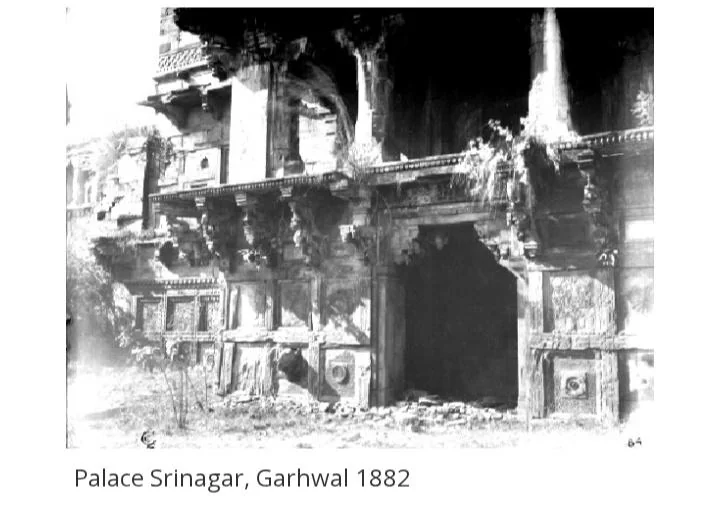
To consolidate his newly unified empire, Ajay Pal relocated the capital from the remote Chandpurgarhi to a more central location. He first moved his seat of power to Devalgarh, and later to the sprawling valley of Srinagar on the banks of the Alaknanda River.
Ajay Pal was not just a conqueror; he was an administrator and a spiritual seeker. In his later years, much like Emperor Ashoka, he renounced violence, became a follower of the Gorakhnath sect, and established a formalized system of governance and taxation that would stabilize the kingdom for centuries.
Territorial Evolution of the Garhwal Kingdom
Garhwal kingdom was also called country of 52 forts. It does not mean there were only 52 forts or provinces in the Garhwal Kingdom. Some historian debates the possibility of more than 100+ Garhs that are present in modern day Himachal Pradesh and Tibet.
The Golden Age and Triumph Over the Mughals
By the 16th century, the Garhwal Kingdom had entered its Golden Age. Operating from the majestic palace at Srinagar, the kings fostered a rich cultural renaissance.
However, this wealth and prosperity attracted the attention of the Mughal Empire. The Mughals, ruling from Delhi and Agra, sought to bring the mountain kingdom into their tributary system.
Nak-Kati Rani
In 1640, Emperor Shah Jahan sent a massive army of 40,000 soldiers under General Najabat Khan to conquer Garhwal. At the time, the kingdom was ruled by Rani Karnavati not be confused with karnvati of rajasthan, acting as a regent for her young son, Prithvi Pat Shah.
Rani Karnavati employed brilliant war tactics. She allowed the Mughal forces to enter the narrow mountain passes near Rishikesh and then severed their supply lines, trapping them in the gorge. Rather than slaughtering the starving army, she ordered that every surviving Mughal soldier—including the commanders—have their noses severed before being sent back to Delhi. She was forever memorialized as the Nak-Kati Rani (The Nose-Cutting Queen), and her sheer ruthlessness ensured Shah Jahan never invaded Garhwal again.
After this Shah Jahan named her Nak kati rani. Mughal commander Najbat Khan drank poison and committed suicide after the humiliating defeat in Garhwal. The source of this war comes from Mughal Historians and later italian traveller Niccolao Manucci who lived in Mughal India.
Rani Karnavati also created several monuments and canals in Dehradun. One of the well known canal was Rajpur canals. Her canals lead water from rispana river to the farmlands of Dehradun
Sulaiman Sikoh
During the Mughal war of succession, Aurangzeb’s nephew, Suleiman Shikoh, fled to the Himalayas to escape execution. King Prithvi Pat Shah granted him asylum in Srinagar, defying Aurangzeb’s direct threats. Mughal Emperor Aurangzeb sent several kings and his ministers to Garhwal Kingdom and paid several of his minister to rebel against him. Several of his ministers were caught and beheaded.
According to one historical book it is mentioned:
He maketh the Raja Jesseinge write one letter after another to the Rajah Serenaguer promising him very great things, if he would surrender Suleiman Chekouh to him…The Rajah answers that he would rather lose his estate, than do so unworthy an action. And Aurangzeb, seeing his resolution, taketh the field and maketh directly to the hills … But the Rajah laughs at all that, neither hath he more cause to fear on that side. Aurangzebe may cut long enough, they are mountains inaccessible to an army, and stones would be sufficient to stop the forces of four Hindustan, so that he was constrained to turn back again.
He further wrote that he might inform the Mughal that he had no respect for either his power or his victories and let him recall to mind the occasion when his father Shah Jahan sent an army to Garhwal and the survivors of that army had their noses chopped off. In the end he has commented, “let him know that he who could cut off noses could equally cut off heads.”
Later Jai Singh a mughal courtier inspired the Garhwali prince Medni Shah to emulate Aurangzeb and revolt against his father. His revolt failed . King Prithvi Shah banished his son Medni Shah from the kingdom. His son died in Delhi.
The Garhwali kings had firmly established their reputation as fiercely independent rulers who bowed to no empire.
Gorkha Invasion
The late 18th century brought unparalleled devastation to the Garhwal Kingdom. The kingdom was weakened by severe internal court rivalries, devastating famines, and a catastrophic earthquake in 1803 that flattened the capital of Srinagar.
Seizing this opportunity, the expansionist Gorkha Empire of Nepal, under the command of Amar Singh Thapa, launched a massive invasion while Garhwal Kingdom was destroyed during earthquake. The Gorkhas were fearsome mountain warriors but were still considered inferior to Garhwal and Kumaon Military. In 1804, a decisive and bloody conflict, the Battle of Khurbura (in present-day Dehradun), took place. King Pradyumna Shah fought valiantly but was killed by gorkhas during cowardly attack .
For the next 12 years, Garhwal suffered under the brutal and oppressive rule of the Gorkhas, an era remembered in local folklore as the Gorkhyali. Heavy taxation, slavery, and severe punishments decimated the local population and economy. The local Garhwali population gave very strong resistance to Gorkhas. In Chamoli Garhwal region civilian army rose against gorkhas and defeated them on multiple occasion. Gorkhas had to sign a peace treaty after multiple humiliating defeats in the region.
In 1815 Garhwali Prince Sudarshan Shah organized an army and attacked Gorkhas and successfully won the kingdom back.