There's a genuine irony sitting at the center of Jim Corbett National Park's identity that's worth addressing directly rather than glossing over: India's oldest national park and one of its most important tiger conservation sites is named after a British-Indian hunter who spent a considerable part of his life tracking and killing man-eating tigers and leopards. Understanding that tension actually helps make sense of both the park's origins and the complicated legacy of the man it's named for.
Who Jim Corbett Was
Edward James Corbett, born in Nainital in 1875 to a British-Indian family, became renowned in the early twentieth century for hunting down man-eating tigers and leopards that had killed significant numbers of people across the Kumaon region — animals that, for various reasons including injury, old age, or loss of natural habitat and prey, had turned to preying on humans in villages, terrorizing local communities for years in some documented cases before being tracked down. Corbett's accounts of these hunts, published in books including "Man-Eaters of Kumaon," became internationally popular and remain in print, offering both dramatic hunting narratives and, notably, some of the more sympathetic and ecologically aware writing about tigers and their behavior available from that colonial-era period.
What sets Corbett apart from a purely colonial trophy-hunter stereotype is that, over the course of his life, he became an increasingly vocal advocate for wildlife conservation, arguing publicly for the protection of tiger populations and their habitat at a time when very few voices, colonial or Indian, were making that case with any real institutional weight behind it. He was involved in efforts that eventually led to the establishment of the park that now bears his name, originally created in 1936 under British administration as Hailey National Park (named for a colonial governor), before being renamed Ramganga National Park after independence and finally Jim Corbett National Park in 1957, some years after Corbett's death in 1955, as recognition of his conservation advocacy.
The Birthplace of Project Tiger
Jim Corbett National Park holds a specific and significant place in Indian conservation history as the site chosen, in 1973, for the launch of Project Tiger, the Indian government's flagship national tiger conservation program, initiated partly in response to alarming data showing a catastrophic decline in India's wild tiger population over the preceding decades due to hunting, habitat loss, and human-wildlife conflict. Being selected as Project Tiger's inaugural reserve reflected both the park's existing conservation infrastructure and its ecological suitability as prime tiger habitat, and the designation brought increased funding, protective status, and management focus that helped stabilize and, over subsequent decades, meaningfully grow the tiger population within the reserve.
The Landscape
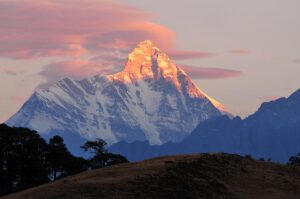
The park spans a substantial area across the Nainital, Pauri Garhwal, and Almora districts, encompassing a genuinely diverse range of terrain and habitat types — dense sal forest, riverine belts along the Ramganga river and its tributaries, grasslands, and hill terrain rising toward the lower Himalayan foothills. This habitat diversity supports not just its famous tiger population but a wide range of other wildlife, including elephants, leopards, several deer species (including chital and sambar), sloth bears, and a substantial and well-documented bird population that draws serious birdwatchers alongside the more general wildlife tourism crowd, with several hundred bird species recorded within the park's boundaries across its different habitat zones.
The Ramganga reservoir, formed by a dam within the broader Corbett Tiger Reserve area, adds a further distinct habitat element, supporting mugger crocodiles and a range of waterbirds, and contributing to the overall ecological variety that makes Corbett more than simply a tiger-spotting destination in the narrower sense.
Visiting: Zones and Practical Realities
The park is divided into several tourism zones, each with different access rules, vegetation character, and relative likelihood of tiger sightings, a division largely intended to manage visitor pressure across the reserve rather than concentrate all tourism traffic into a single heavily trafficked core area. Dhikala zone is generally considered the most prized and ecologically rich zone, offering the best combination of habitat diversity and wildlife sighting potential, but it also has more restrictive access, generally requiring advance booking and typically visited via a full-day safari or overnight stay at the forest lodge facilities within the zone itself, rather than a quick entry-and-exit visit.
Other zones — including Bijrani, Jhirna, Dhela, and Durga Devi, among others — offer varying combinations of accessibility, crowding, and wildlife density, with some zones remaining open across more of the year than others, since certain zones close during the monsoon months when road conditions within the park become difficult and animal movement patterns shift. Safari bookings, generally required in advance and often through official online systems given the park's popularity, typically operate in morning and afternoon slots, using either open jeeps or, for Dhikala zone specifically, sometimes larger canter vehicles depending on group size and booking type.
Tiger sightings, it's worth being honest about, are never guaranteed on any given safari despite the park's healthy tiger population and reputation — tigers are naturally elusive, wide-ranging, and largely avoid direct human contact, and visitors expecting a guaranteed dramatic sighting on a single short safari are often setting themselves up for disappointment, even though the park's overall tiger density and sighting probability across multiple safaris or a longer visit compares favorably to many other Indian tiger reserves.
Conservation Challenges That Haven't Gone Away
Corbett's status as a flagship, well-funded, high-profile reserve hasn't insulated it entirely from the broader pressures facing Indian wildlife conservation. Human-wildlife conflict remains a real and ongoing issue in villages and agricultural areas bordering the park, where tiger and elephant movement outside strict park boundaries can result in livestock loss, crop damage, and occasionally human casualties, generating genuine tension between conservation priorities and the livelihoods of communities living adjacent to protected forest land.
Infrastructure pressure, including tourism development, road construction, and broader regional development pressures common across Uttarakhand, has periodically raised concerns among conservationists about habitat fragmentation and corridor connectivity between Corbett and other forest areas that tiger and elephant populations rely on for genetic diversity and long-term population health, issues that don't have simple resolutions given the competing economic and development pressures facing the wider region.
More Than a Checklist Safari Destination
For visitors coming primarily for the possibility of a tiger sighting, it's worth reframing expectations around the park's broader ecological richness rather than treating the visit as a single binary success-or-failure proposition centered entirely on tiger photography. The bird diversity alone is significant enough to justify a visit on its own terms for anyone with even passing interest in birdwatching, and the landscape itself — sal forest opening onto riverine grassland, the Ramganga winding through it, hills rising in the distance toward the higher Himalaya — offers a genuinely striking cross-section of Kumaon's ecological range in a single protected area, tiger sighting or not. Corbett's real achievement, viewed across nearly a century since its founding, isn't any single dramatic wildlife encounter it offers visitors; it's that a landscape this ecologically rich has been maintained and actively protected for this long, through colonial administration, post-independence policy shifts, and the launch of Project Tiger, into a present where India's wild tiger population, while still facing real challenges, has recovered meaningfully from the crisis point that made Corbett's designation as the birthplace of tiger conservation necessary in the first place.