
Drive up to Almora today and you'll pass through a town that still carries the bones of a royal capital in its layout — narrow lanes, old stone houses with carved wooden facades, temple complexes that predate the British arrival by centuries. This was the seat of the Chand dynasty, which ruled over Kumaon for roughly five hundred years, from somewhere around the eleventh century until the Gorkha invasion at the very end of the eighteenth century swept them aside. It's a long run by any measure, longer than most dynasties anywhere in the subcontinent managed, and it shaped Kumaoni identity, architecture, and administration in ways still visible if you know where to look.
Origins Wrapped in Legend
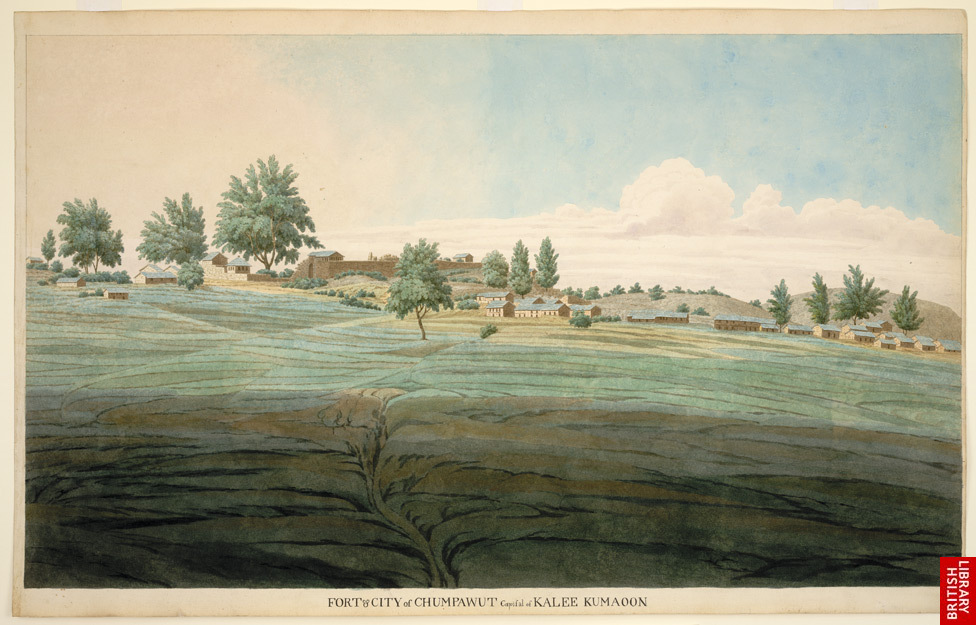
Like most royal houses of the era, the Chands' origin story comes wrapped in more legend than hard documentary evidence. The traditional account holds that Som Chand, said to be a Rajput prince from Jhusi near Prayagraj (then Kanyakubja territory), arrived in the Kumaon hills and established his rule sometime in the eleventh century, with Champawat as his first capital. Whether Som Chand was a real historical figure who actually migrated from the plains, or a foundational myth constructed later to give the dynasty Rajput legitimacy — a common pattern among hill kingdoms trying to claim high-status plains ancestry — is something historians still debate. What's less disputed is that by around the twelfth or thirteenth century, a functioning Chand state existed in the Kumaon region, gradually absorbing or subjugating smaller local chieftaincies.
Champawat remained the capital for several centuries before the Chands shifted their seat to Almora in the sixteenth century, during the reign of Kalyan Chand, a move that reflected both strategic considerations and Almora's more central position within the growing kingdom's territory.
Consolidation and the Golden Stretch
The Chand kingdom's real period of consolidation and cultural flourishing came under rulers like Rudra Chand in the late sixteenth century and later Baz Bahadur Chand in the seventeenth century. Rudra Chand is often credited with establishing more formal administrative structures, patronizing temple construction, and expanding the kingdom's boundaries through both alliance and conquest. He's also remembered for cultivating relations with the Mughal court, a pragmatic move that let the Chands operate with a fair degree of autonomy while avoiding the kind of direct Mughal military attention that swallowed up less careful hill states.
Baz Bahadur Chand, who ruled in the mid-seventeenth century, gets particular credit in local histories for infrastructure and temple patronage — the copper-plated roof of the Golu Devta temple and improvements to town planning in Almora are commonly attributed to his reign, along with a general strengthening of trade routes connecting Kumaon to Tibet and the plains. Under his rule and that of his immediate successors, Kumaon developed a genuine administrative apparatus — revenue systems, a court structure, a standing military — that went well beyond the loose tribal chieftaincy model common in some neighboring hill regions.
Temples, Coinage, and the Physical Record
A useful way to trace the Chand period, beyond written chronicles, is through what they built and minted. Almora and the surrounding region are dotted with temples from the Chand era — stone and wood construction blending plains-influenced temple architecture with local Kumaoni building techniques adapted to the hill climate and available materials. The Chand rulers issued their own coinage too, distinct currency that circulated within the kingdom, a detail historians use to track economic activity and territorial reach, since coin hoards found in different locations help map how far Chand economic influence actually extended.
The dynasty also left behind a body of court chronicles and inscriptions, though nowhere near as extensive as what survives from larger plains empires. What exists has been pieced together by historians alongside oral tradition, temple inscriptions, and colonial-era documentation compiled after the British took control of the region in the early nineteenth century, since early British administrators in Kumaon, notably figures like Henry Ramsay, took a real interest in documenting local history as part of colonial administration.
Conflict, Rivalry, and the Garhwal Border
Relations between the Chand kingdom of Kumaon and the neighboring Panwar dynasty of Garhwal were rarely peaceful for long. The two hill kingdoms fought repeated border skirmishes over centuries, contesting territory in the region roughly separating modern Kumaon and Garhwal divisions. Neither side ever achieved a decisive, lasting conquest of the other, and this rivalry is part of why Kumaon and Garhwal developed as distinct political and cultural zones rather than merging into a single unified hill state, a distinction that persists today in the different dialects, customs, and regional identities of the two areas.
The Chands also had to navigate pressure from the plains — first from various regional Rajput and Rohilla powers, later from the expanding Mughal empire, and they generally managed this through a mix of tribute payment, strategic marriage alliances, and occasional military resistance, rather than outright confrontation that they likely couldn't have won against a full Mughal army.
The Fall: Gorkha Conquest
The end came from the east. Through the latter half of the eighteenth century, the Gorkha kingdom of Nepal was expanding aggressively westward, absorbing hill territories one after another. By 1790, Gorkha forces had conquered Kumaon, ending Chand rule after roughly five centuries. The last effective Chand rulers had already been weakened by internal succession disputes and diminishing authority in the decades before the Gorkha arrival, which made the conquest considerably easier than it might otherwise have been.
Gorkha rule over Kumaon, and shortly after over Garhwal as well, was harsh by most contemporary accounts — heavy taxation, forced labor, and a general reputation for brutal administration that shows up repeatedly in local oral history and later British colonial records (though it's worth noting the British had their own reasons to paint Gorkha rule negatively, since it justified their subsequent takeover). Gorkha control lasted roughly a quarter-century, ending only after the Anglo-Nepalese War of 1814 to 1816, after which Kumaon passed into British hands under the Treaty of Sugauli, becoming a British-administered district that would remain so until Indian independence.
What Survived
The Chand legacy in Kumaon isn't confined to history books and temple stones, though there's plenty of that too. A lot of what people now think of as distinctly Kumaoni — certain festival customs, administrative place names, temple traditions still actively practiced at sites the Chands patronized or built — traces back to this five-hundred-year period. Almora's continued status as a cultural center of Kumaon, well after it stopped being anyone's political capital, owes something to the centuries the Chands spent building it into one.
Local deities and their associated temples, particularly Golu Devta — a folk deity closely associated with justice and still worshipped intensely across Kumaon today, with people submitting written petitions to the god much like a court filing — gained much of their prominence and formal temple structure during the Chand period, when royal patronage helped fix certain regional deities into the more organized religious landscape that persists now.
For a dynasty that ruled for half a millennium and then vanished from direct power within a single generation of Gorkha conquest, the Chands left behind less written documentation than you'd expect for a state that long-lived, but enough physical and cultural residue that you can still trace their outline across Kumaon today, in stone, in coinage, in the layout of Almora's old town, and in a folk deity whose court still, in a sense, remains open for business.